
ANA MENDIETA
Content Warning: This article discusses and observes pieces of sexual assault, blood, violence, and death.
Ana Mendieta was born in 1948 in the Pearl of the Antilles – Havana, Cuba. At twelve years old, she and her sister were two out of the 14,000 unaccompanied minors sent to America under Operation Peter Pan, a political exodus initiated by Cuban parents to save their children from Fidel Castro’s communist regime. It would be five years until they would be reunited with their mother, enduring years of displacement in Iowa’s foster care system, and eighteen years until their father would reach American shores, after serving nearly two decades in a political prison for his involvement in counterrevolutionary activity, including the Bay of Pigs.
Ana, having faced immense prejudice and discrimination throughout her time in America, would find art as an outlet of her pain. Her Silueta Series, a collection of 200+ outlines of her body in nature, all of which use materials of mud, blood, ice, water, gunpowder, fire, and/or natural vegetation, remains her most notable body of work. They are an expression of her desire to return to a land that accepted her.
At the age of thirty-six, she “fell” 33 stories from the New York apartment she shared with her husband, artist Carl Andre (1935-2024), who was charged with second-degree murder.
During Andre’s trial, his defense used Ana’s artwork to portray her as psychologically unstable and suicidal, interpreting her explorations of blood, death, ritual, and the body as evidence of a “death wish.” He was acquitted of all charges. Her death has been interpreted by some as a suicide. She was afraid of heights.
However, I digress. I am not interested in getting into the specifics of this case. Nor am I interested in a retrospective analysis of her art through the lens of her death. That is what history has done to her work and to her.
I am here to understand her art through the lens of her life and of her purpose.
In doing so, I have found reason to believe that her artistic expression was never asking for death. It was searching for return.
Welcome to Ego Death.
Pain of Cuba
body I am
my orphanhood I live
In Cuba when you die
the earth that covers us
speaks.
But here,
covered by the earth whose prisoner I am
I feel death palpitating underneath the earth.
And so,
As my whole body is filled with want of Cuba
I go on to make my work upon the earth,
to go on is victory.
A poem by Ana Mendieta (c. 1981)
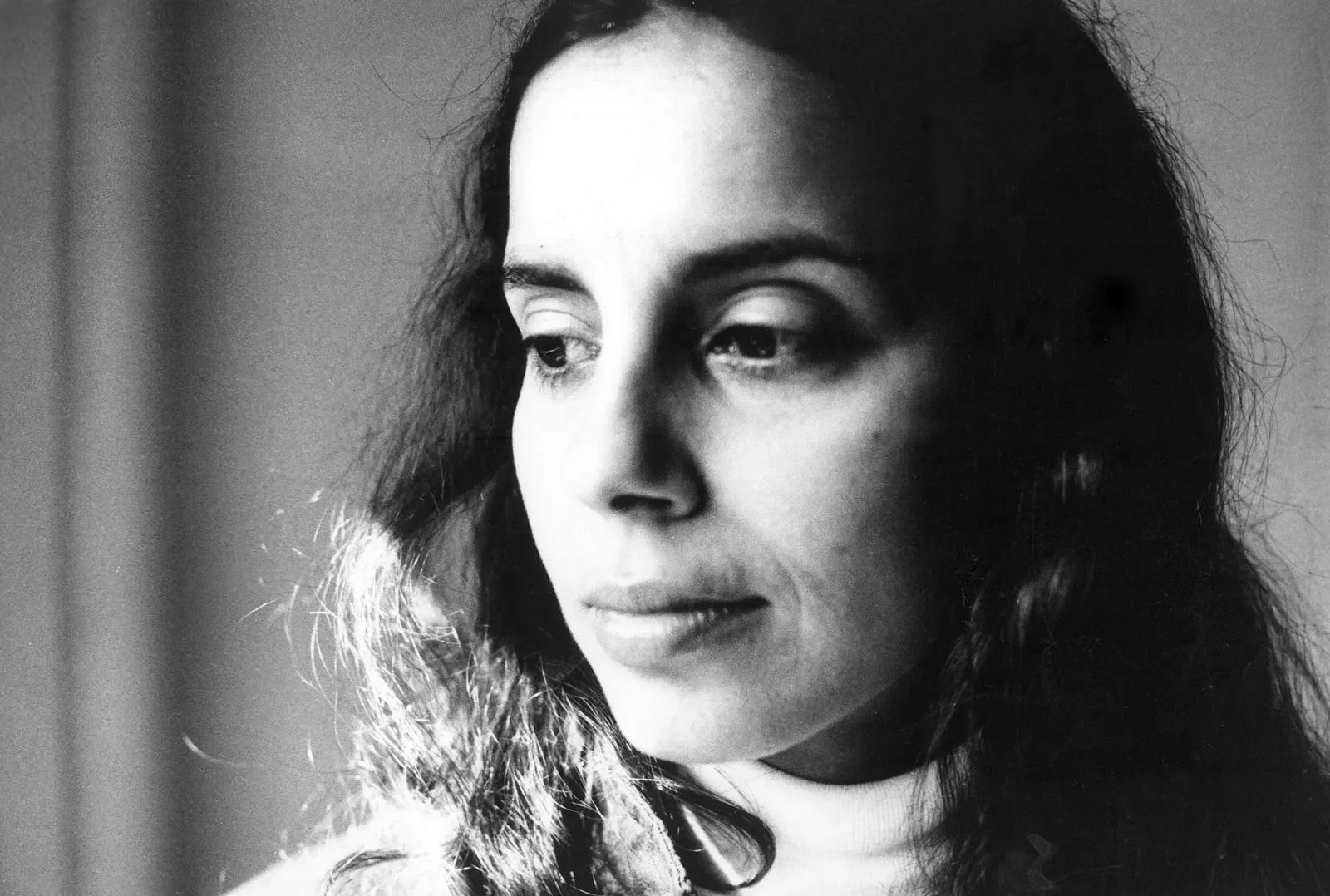
© The Estate of Ana Mendieta Collection, LLC; Courtesy Galerie Lelong & Co.
For the last few days, I’ve struggled, insufferably, to piece together a remark I once heard, or maybe even wrote down, in a class. A teacher of mine, whose identity also remains a question in my memory, defined the word “tragedy.” As I remember it, she simply characterized it as joy, taken away.
It has always stuck with me – or at least the emotional flavor of the sentiment – that true pain and suffering, through the lens of tragedy, is experienced when you are suddenly forced to live amongst ghosts. Or really, phantoms of memory. Haunted by something, or someone, or some place of immeasurable value…that may no longer exist.
Ana’s deepest joy drew breath in the memory of home.
“I came from a tropical country and I have a picture of myself, seven months old, crawling around on the sandy beach. We had a house there, and I would be outside from 7:30 a.m. to 2:00 in the afternoon…out in the water and the sand. I learned about my body from doing that. Now I continue to use my body to communicate with the world.”
Cuba possessed the warmth of an accepting sun, a freedom and safety to explore who she was within the bounds of nature, and roots planted in a culture, an ancestry, a family. The country also exposed her to, at an early age, a rich culture of spiritual and artistic practices that would forge her DNA of beliefs, morality, and emotionality.
“It is this sense of magic, knowledge, and power, found in primitive art, that has influenced my personal attitude toward art making.”
It would make sense that her body and nature became her instrument of creation in all of her work. She lived with the ghosts of this joy.
The true tragedy was when this warmth, this culture, this safety was ripped away. America’s cold embrace valorized this choice of a medium. Her midwestern adolescence, amidst a Civil Rights Movement, stripped her of an identity and categorized her as “other.” It was imperative for Ana to use a tool that demanded recognition, physically imposing her expression, and one that left a significant, chilling trace. Because as a woman and as a Cuban, she was muzzled.
All of her work, whether her body is present or absent, denotes belonging.
“Having been torn from my homeland during my adolescence, I am overwhelmed by the feeling of having been cast from the womb. My art is the way I re-establish the bonds that unite me to the Universe. It is a return to the maternal source.”
Now, depression, by some definitions, is characterized by a feeling of “hopelessness.” Tragedy, with its “taking” and “haunting,” can most certainly elicit that in an individual. However, I really don’t believe that was the case for Ana Mendieta.
The tragedy, or the joy, taken away, of her childhood produced a seeking for belonging in her art as opposed to a despondency or a dread. A desire to rediscover what was once ripped away.
THE BODY AS A DEMAND FOR RECOGNITION
“Art is a material act of culture, but its greatest value is its spiritual role, and that influences society, because it’s the greatest contribution to the intellectual and moral development of humanity that can be made.”
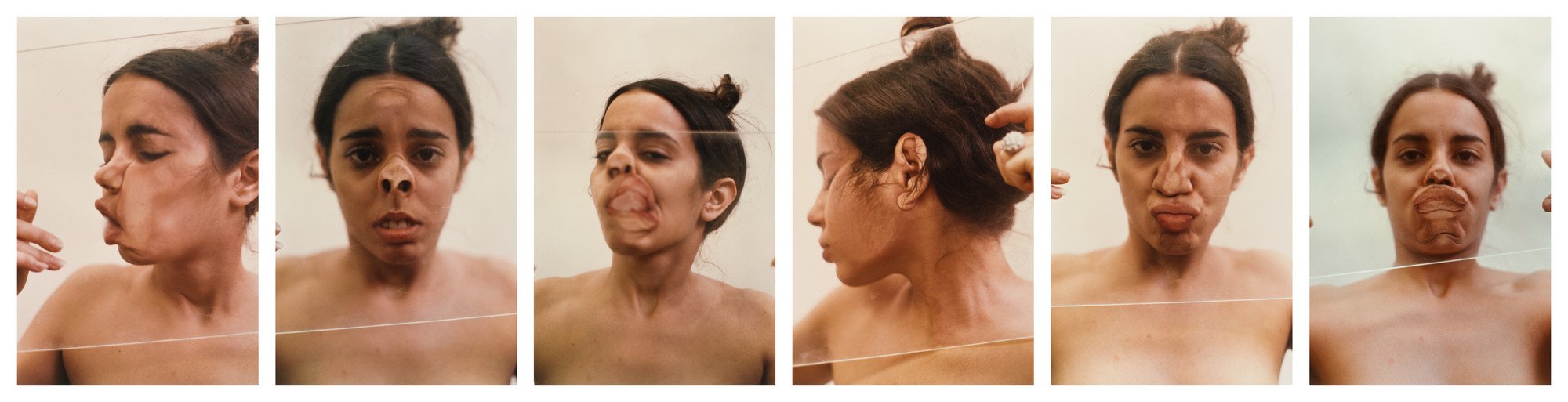
In Untitled (Glass on Body Imprints), 1972, Ana distorts her self-portrait with the use of glass.
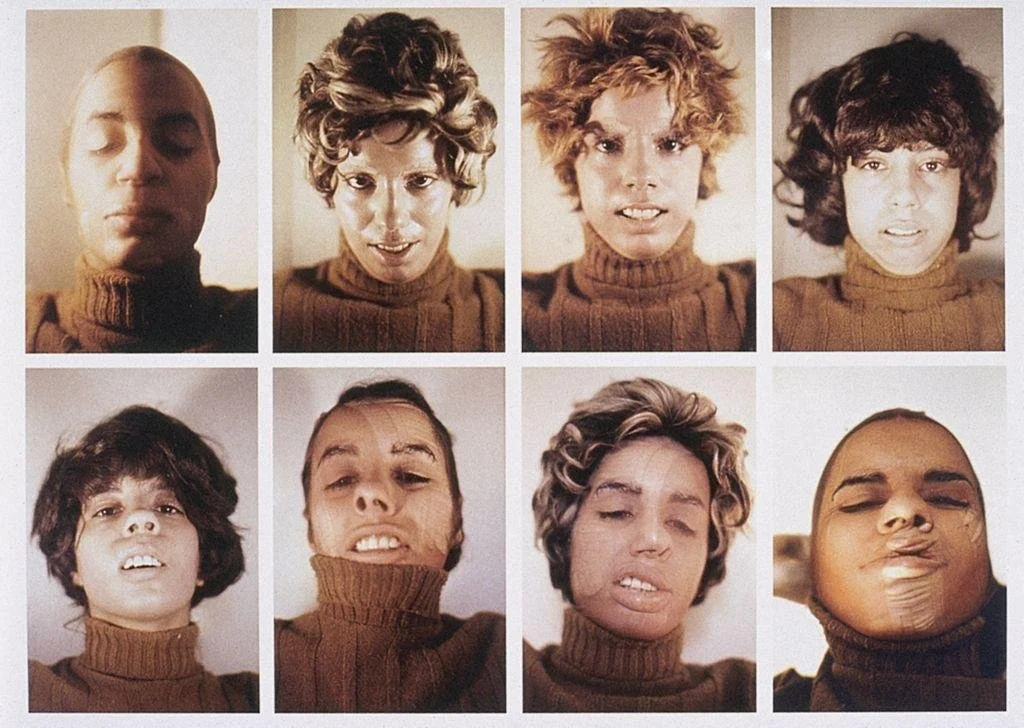
While in Untitled (Facial Cosmetic Variations), 1972, she uses makeup and nylon to also mask her true appearance.
In two of her earliest works, published at Iowa State University, Ana established her face as the primary subject. The physical presence of her body coerces your observation; however, its disfigurement disables you from casting judgment. It’s nearly impossible to determine the structural shape of any part of her face in the first, let alone her skin color or gender in the latter, calling out a societal bias based on feminine beauty standards, the male gaze, and race.
“When a young student at the University of Iowa was found murdered after having been brutally raped…I started doing performances as well as placing objects and installations in public places in order to bring attention to this crime and all sexual violence.”
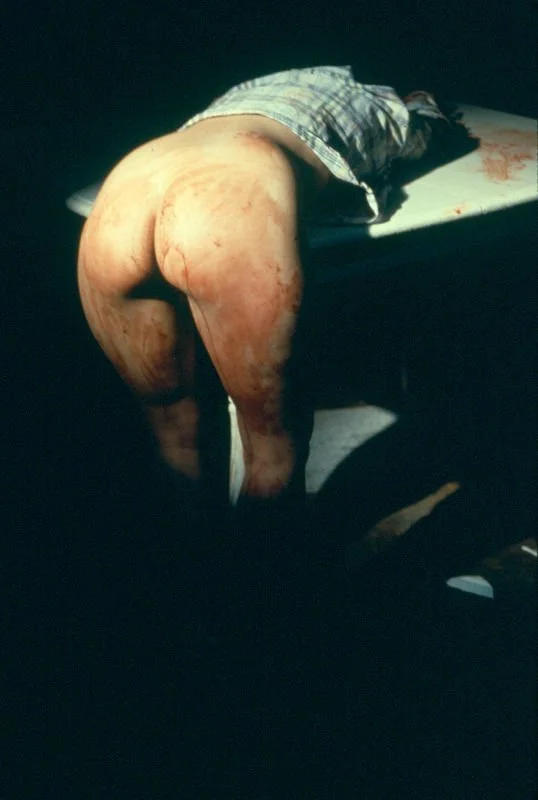
Rape Scene, 1973
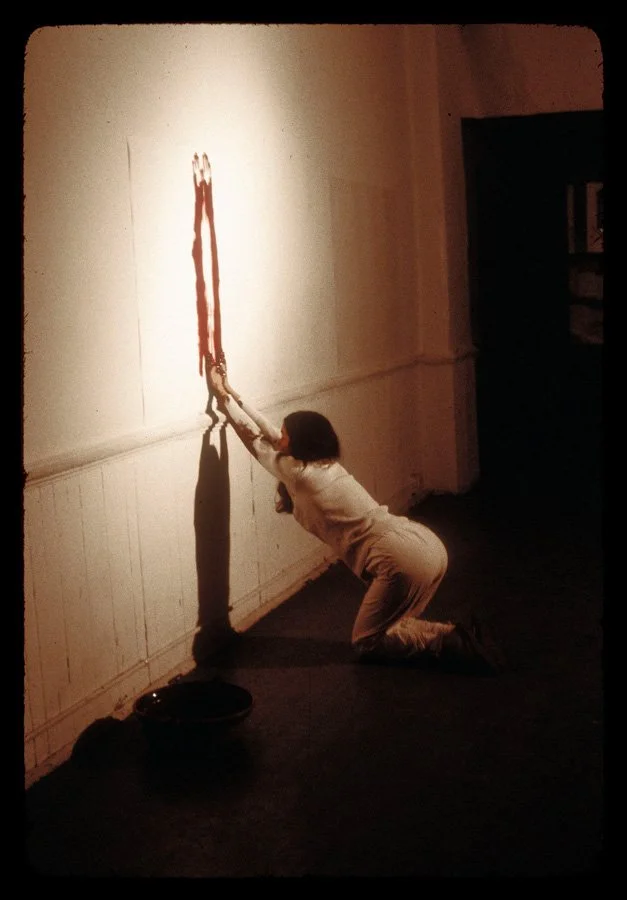
Body Tracks, 1974
After inviting several of her classmates over to her apartment, Ana stood naked from the waist down, bent over, and smeared with blood in Rape Scene. The presence of her body demanded the recognition of a female subject, which granted identity to the invisible, unnamed victim of rape. Moreover, its presence was jarring, violent, emotional, raw - it forced observers to sit with the discomfort and pain of sexual violence and death - to elicit understanding, empathy, a call to action. Even now, you feel it too, don’t you?
I also find this piece, amongst so many others, incredibly egoless - as she used her body in its most vulnerable state as a tool for justice.
Drawing from Santería, the Afro-Cuban religion she explored frequently, Ana utilized animal blood and tempera as her paint, and her body as her paintbrush in Body Tracks. In this performance, she dipped her hands in blood and dragged them down the walls, leaving heavy tracks. It’s most noticeably a reflection of violence and bodily harm, forcing observers to perceive the trauma in her presence. The “evidence” of the violence is what remains, instilling this idea of permanent anguish, suffering, and wound, specifically in violence directed towards women.
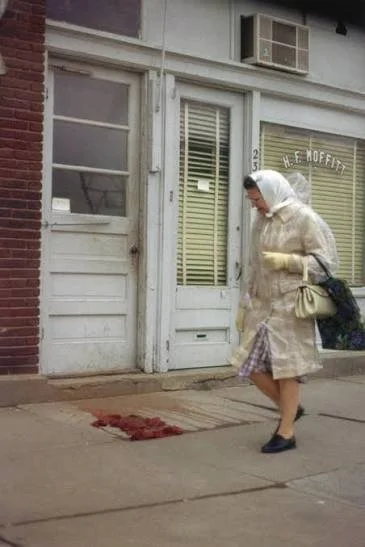
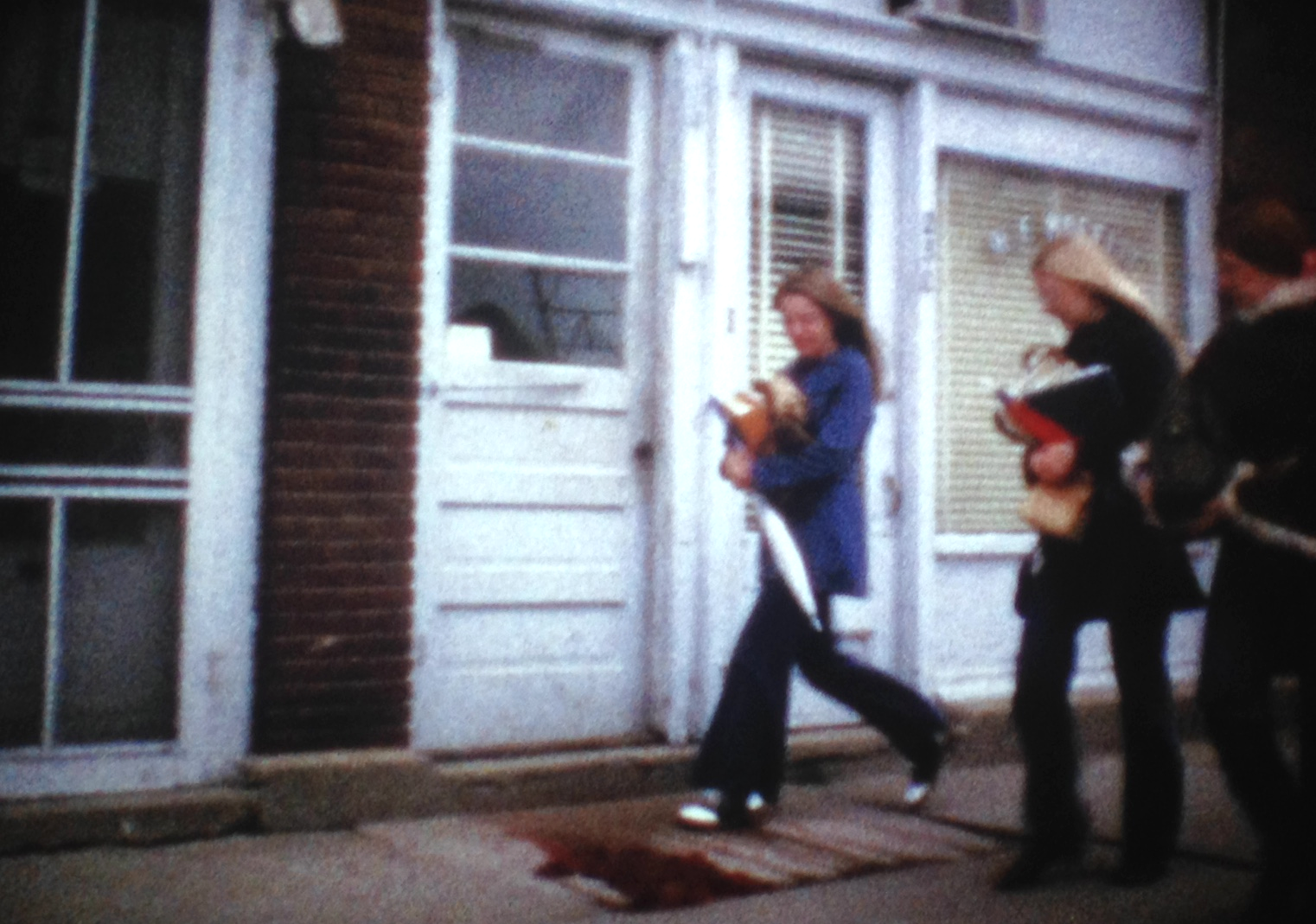
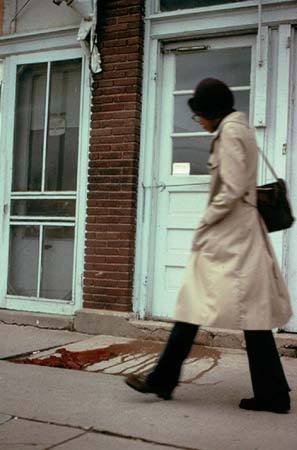
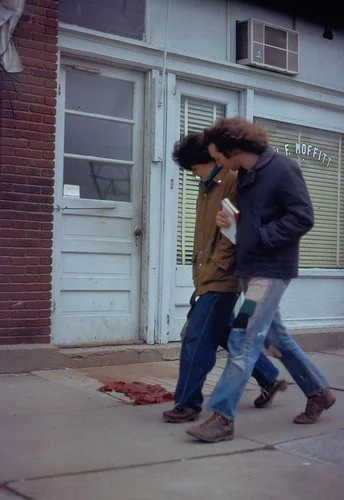
Similar to Body Tracks, which inevitably created a “crime scene,” Untitled, (People Looking at Blood, Moffitt), 1973, proved to be an even greater social experiment. After pouring blood on the pavement in Iowa City, with a mix similar to that of Body Tracks, Ana hid in the bushes nearby with a Super 8 Camera. As most people simply walked by, some even tracing blood on their shoes, Ana’s experiment revealed public apathy, or bystander apathy, in relation to violence. Here, the body, or a byproduct of the body, demanded recognition, but went ignored, discarded, and uncared for.
THE BODY AS PART OF THE EARTH
“I was attracted to nature because I didn’t have a land.”
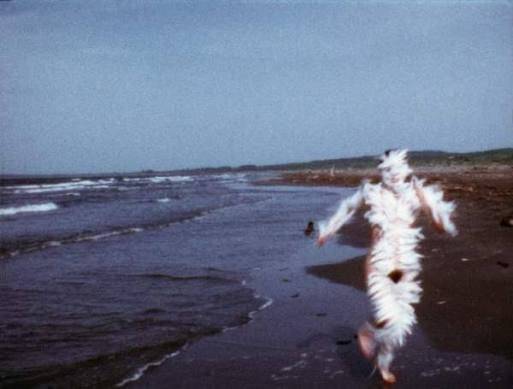
In Bird Transformation, 1972, Ana covered her sister (along with herself and her classmates in other documentation) in white feathers, using latex, leaving only the eyes, feet, and genitalia exposed.
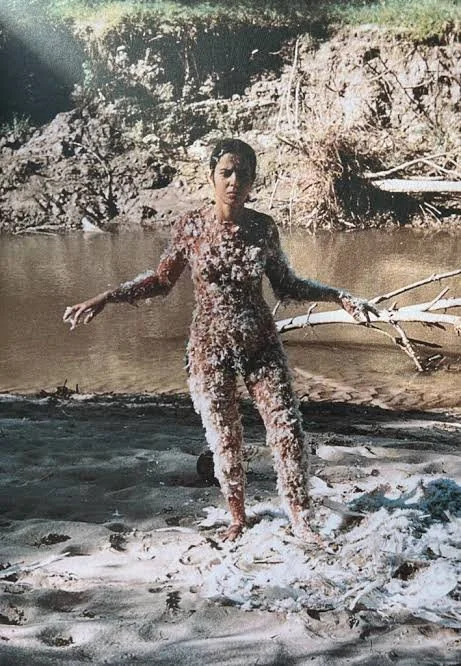
In Blood + Feathers, 1974, Ana covered herself in white chicken feathers using animal’s blood.
In both of these pieces, the body blends with nature, transcending human bounds. This is the beginning of her work in which she sought to “return to the source,” finding connection and belonging in nature. While feathers can symbolize flight and freedom, and white may symbolize purity and new beginnings, perhaps the act of covering her body in white feathers speaks to racial prejudice - the need to cover oneself in a disguise, or a color, deemed more “acceptable.” But, in reality, she is covered in materials of flight, nature, and transcendence.
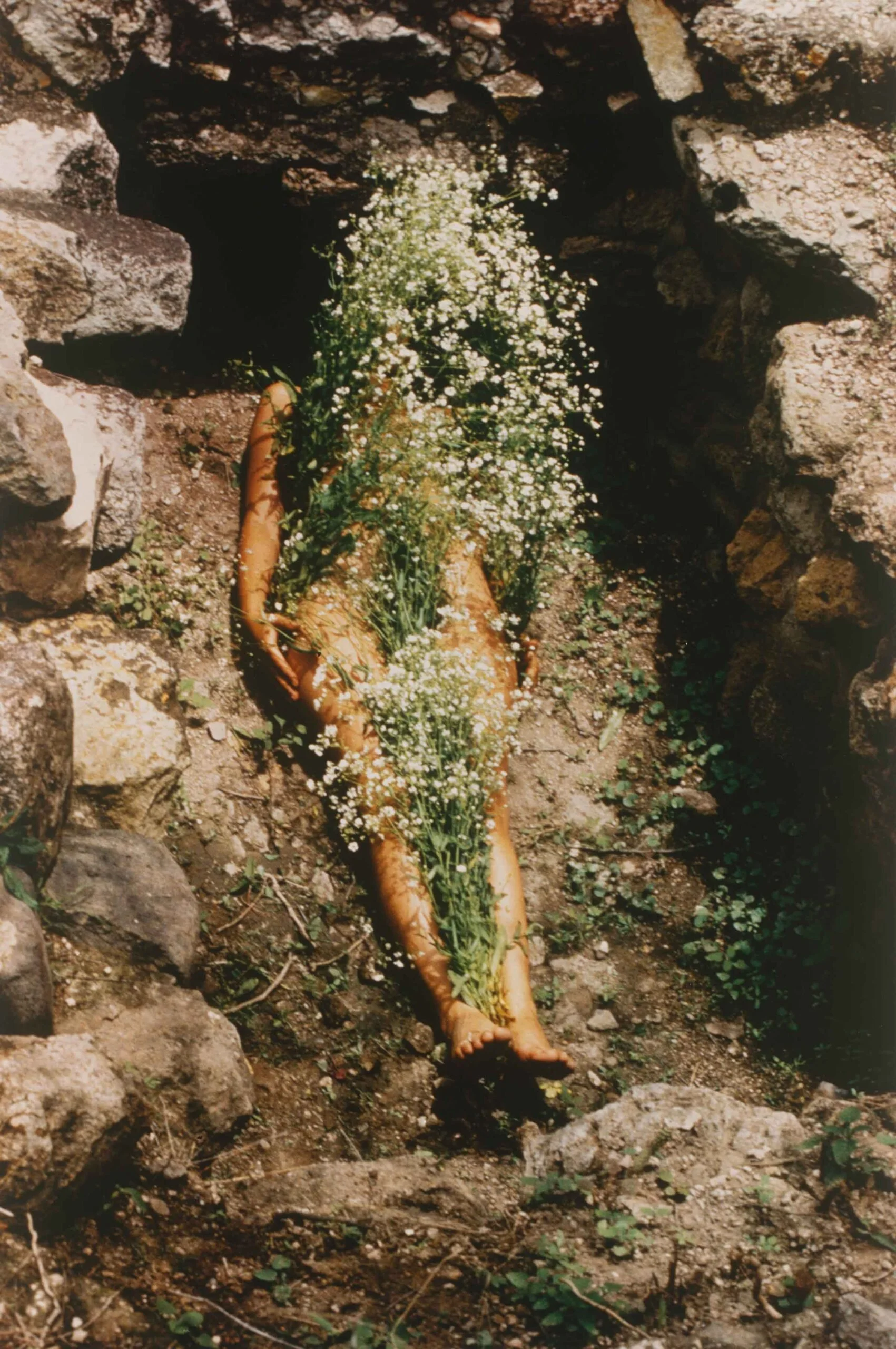
Imagen de Yagul, 1973
Tree of Life, 1976
In Imagen de Yagul, Ana laid in the Zapotec Tomb at the historic, ancient archeological site of Yagul in Oaxaca, Mexico. She covered herself with living, breathing flowers that appear to grow out of her. Mexico, with its rich cultures and traditions, presented her with an imagined notion of what home might have been like. She, therefore, established herself in this land, surrounded by flowers, indicating time, history, and rebirth.
Something I find extremely important to note is the phrase “Monte Adentro.” Monte translates to wild, “uncultivated land” or “mountain,” while “Adentro” signifies “inside.”
Other translations, specifically within the spiritual realm of Santería, translate this phrase to “going deep into the woods,” abandoning colonized spaces, and aligning oneself to the natural to navigate and heal in the material world. Her work becomes a literal translation of this sentiment. The act of physically entering the land and leaving her trace is a spiritual practice in itself. Abandoning material possessions and ego, she committed herself to the landscape in search of a return to the maternal source.
“I have thrown myself into the very elements that produced me.”
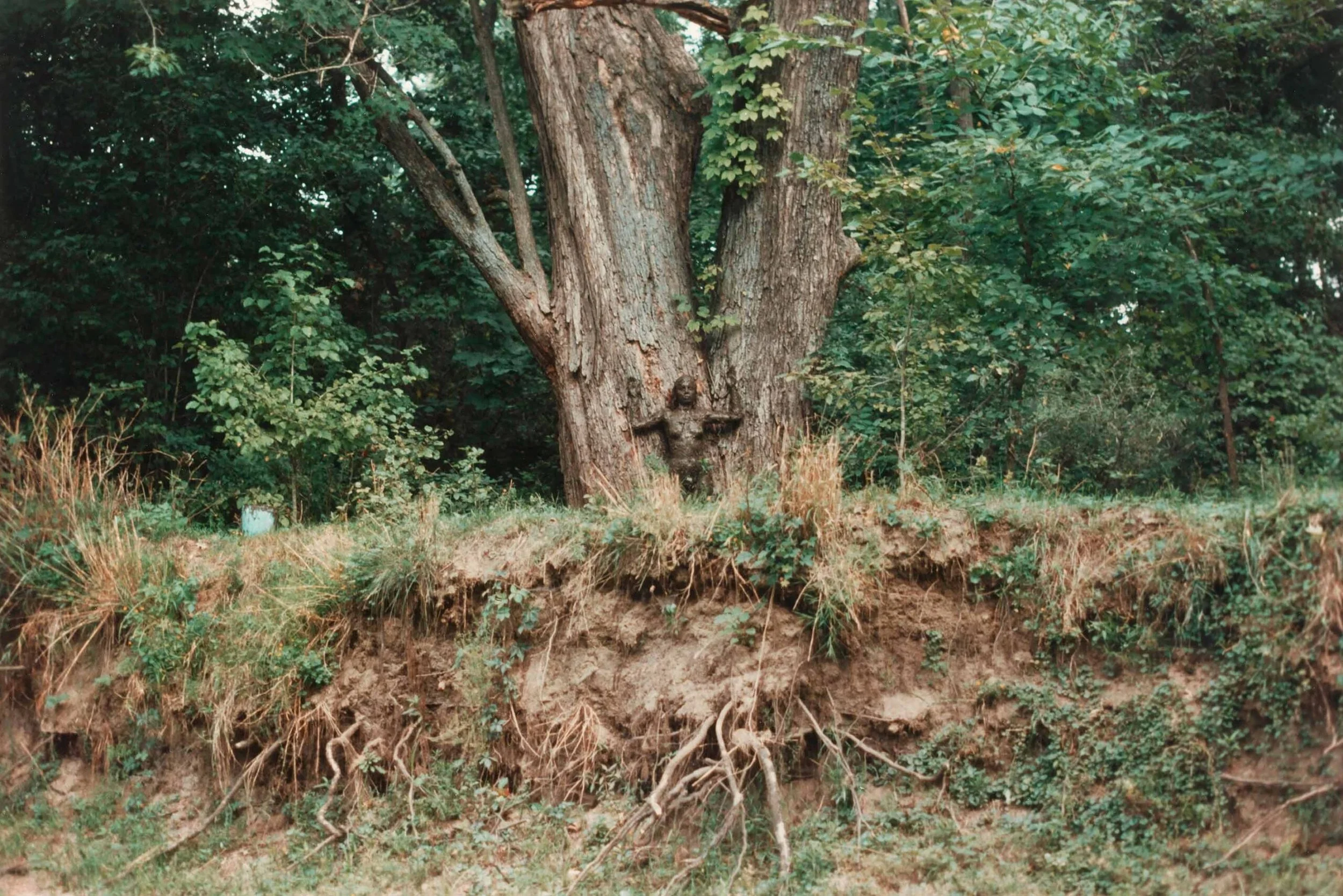
Tree of Life acts similarly. However, in this piece, Ana covered herself in mud, blended into the nature around her. This, like Imagen de Yagul, also amalgamates the idea of becoming one with the earth, but also asks us the question, or, rather, asks herself the question, where does the body end and nature begin?
THE BODY AS A TRACE
“This obsessive act of reasserting my ties with the earth is really the reactivation of primeval beliefs ... [in] an omnipresent female force, the after image of being encompassing within the womb, is a manifestation of my thirst for being.”
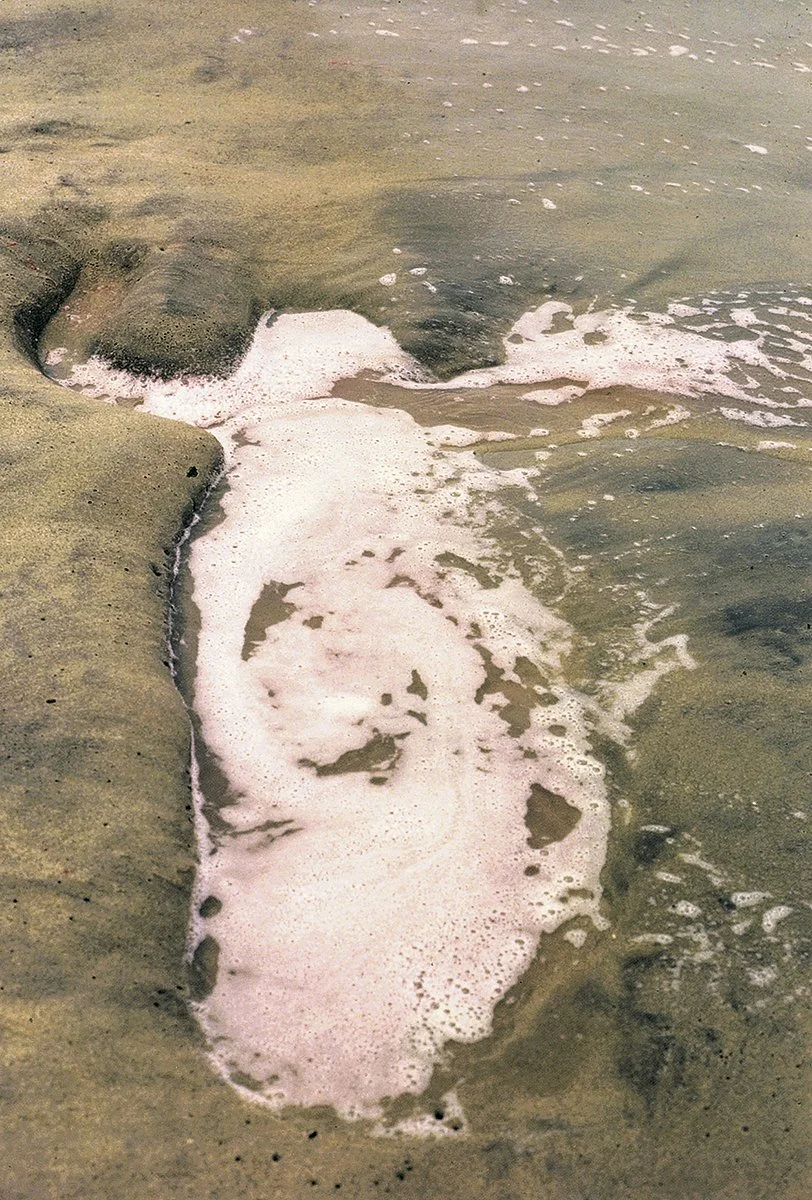
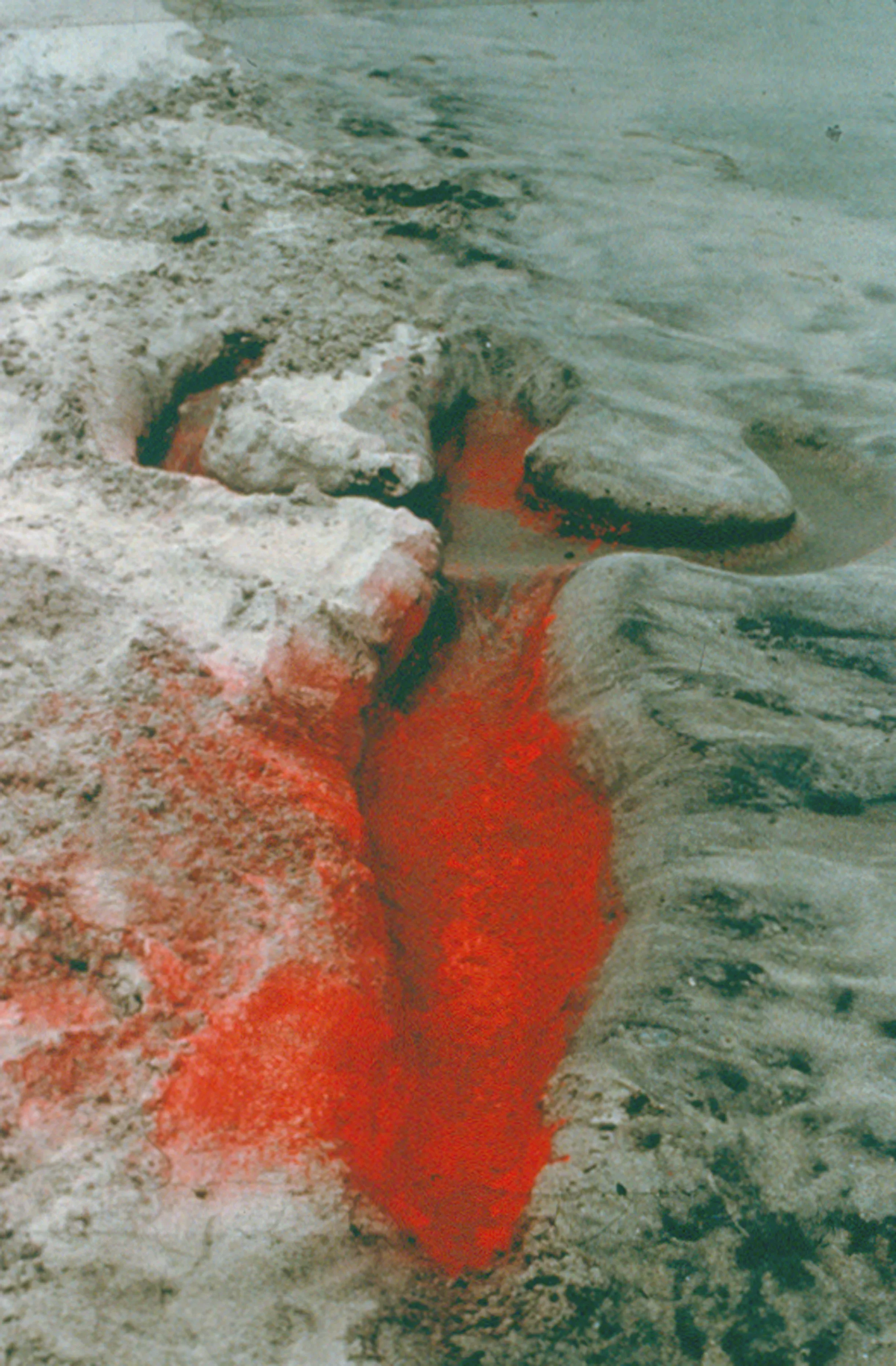
Beach Silhouettes (1976-77) are the memory of home, the memory of the sand.
In these silhouettes, some in Iowa, but the majority on the shores of Mexico, she traced her outline, leaving a mark that was soon eroded by the powers of the sea. In some pieces, like the first image, she used tempera to paint inside her trace, others she did not. Some works nod to birth, others death, as both ideas appear on this spectrum of grief and search for belonging. This beach series, in particular, nods to displacement, erasure, and the idea, if I go back to my land, will it even remember me?
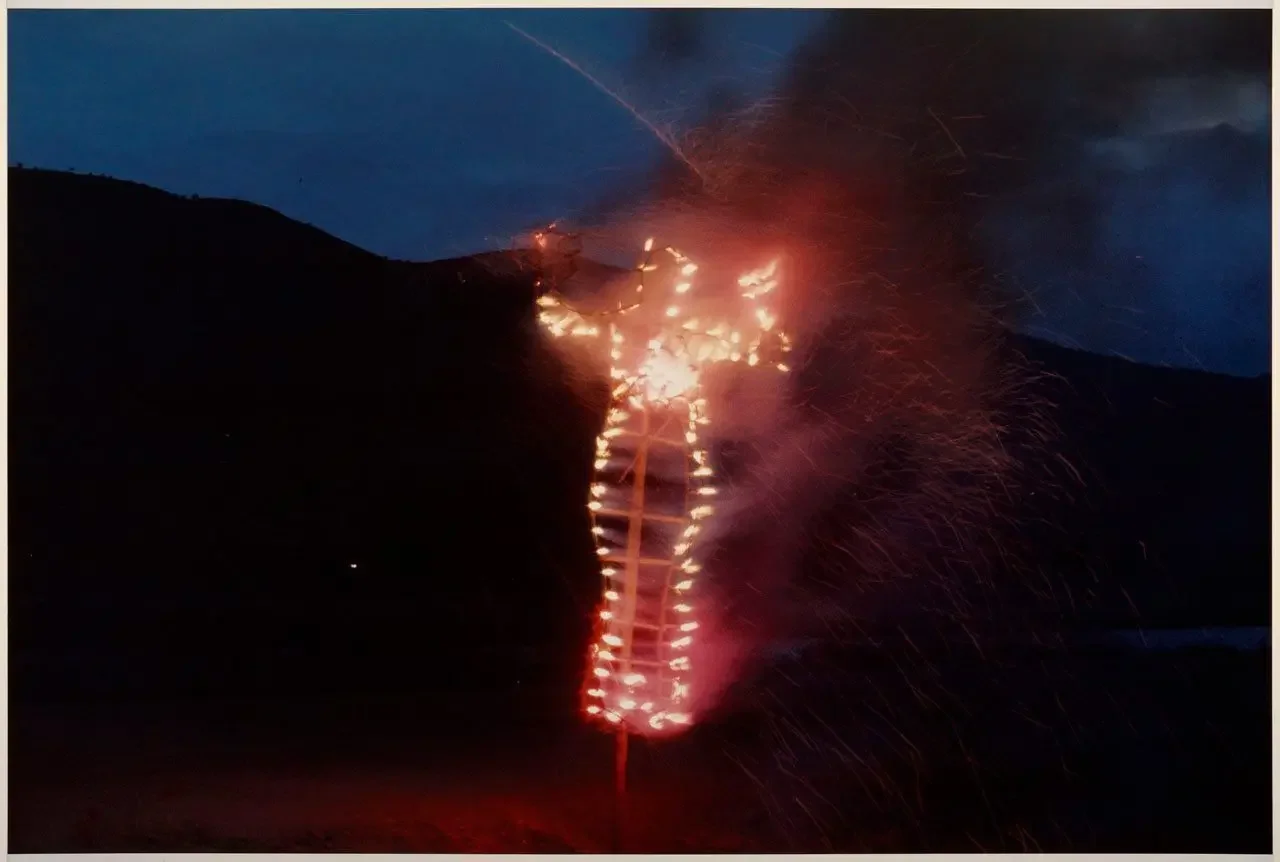
Anima, Silueta de Cohetes (Firework piece), 1976
In Oaxaca, Ana constructed this bamboo and wire structure, in the outline of her body, rigged it with fireworks, and set it ablaze.
“Anima” in Spanish and Latin translates to “soul.” The ignition of her “soul” in this piece is profound - as it also lends itself to the idea of ritual, inspired by Santería, Catholicism, and other indigenous traditions as symbols of freeing the spirit. I find it extremely powerful that she configures a way to make permanent her trace on an unyielding, forever changing land, as a search for belonging.
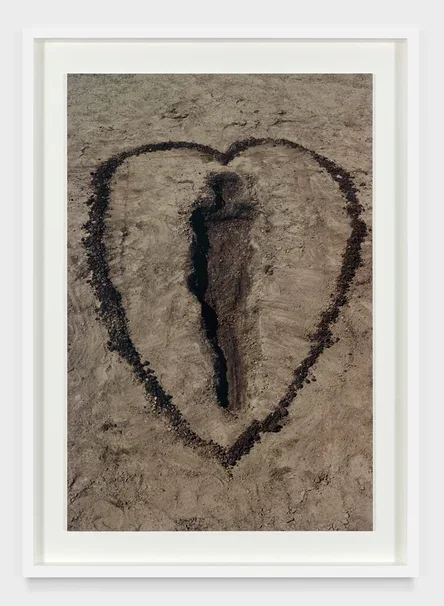
Incantation to Olukun-Yamaya, 1977
Olokun and Yemaya, West African deities of water, fertility, and motherhood, are often invoked if one desires a child or needs a home.
The placement of this installation, on the sands of Mexico, was an offering, an asking for protection, a gesture of love and deepened connection for the powers and gods of the land to bring her home. It is significant that a lot of her ritualistic works were connected to Mexico, as I stated before, it offered her more of a space of personal exploration and connection, as its cultural practices, spirituality, and traditions felt closer to home.
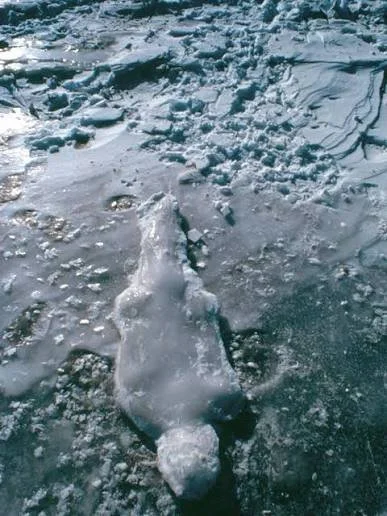
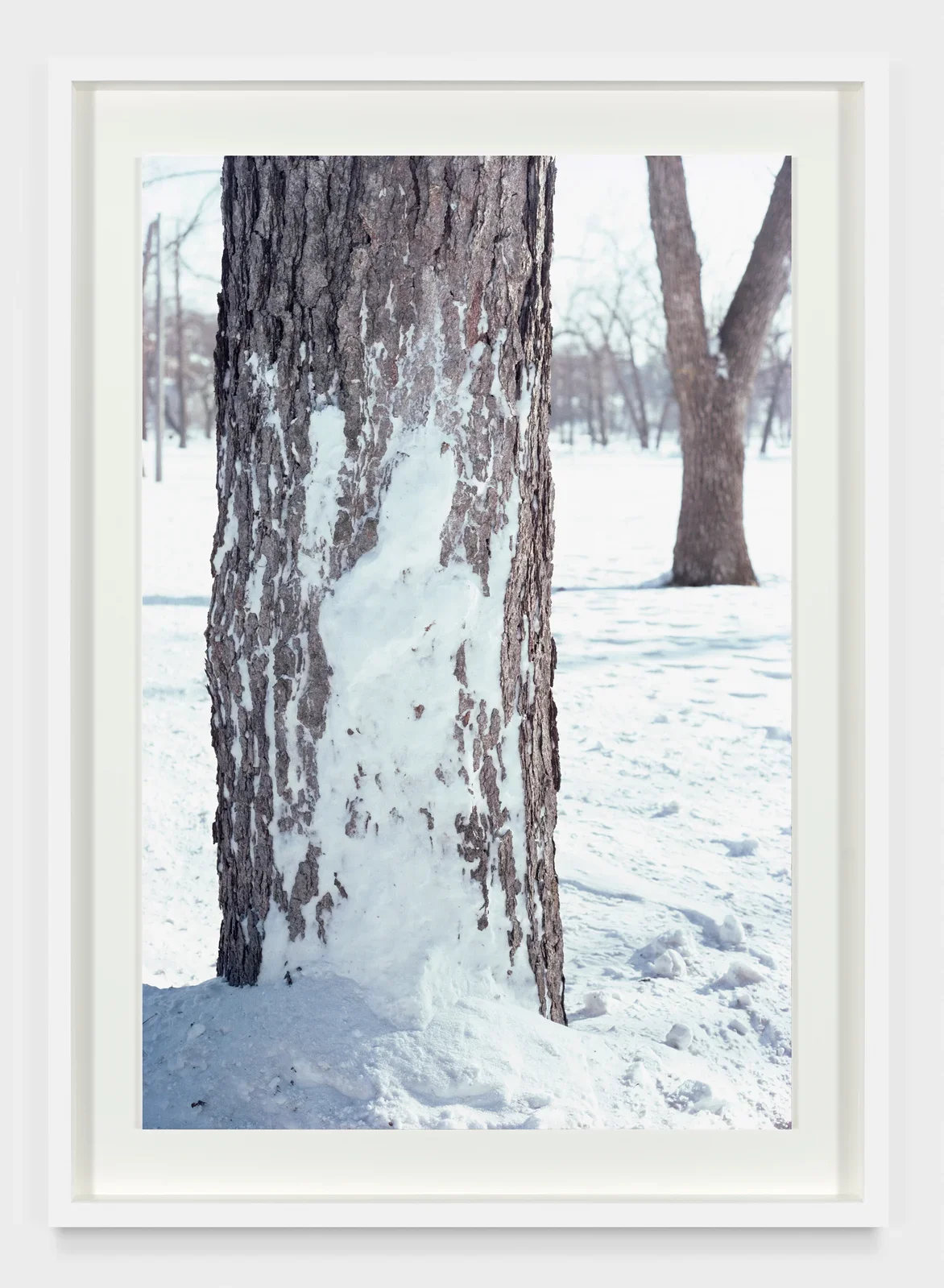
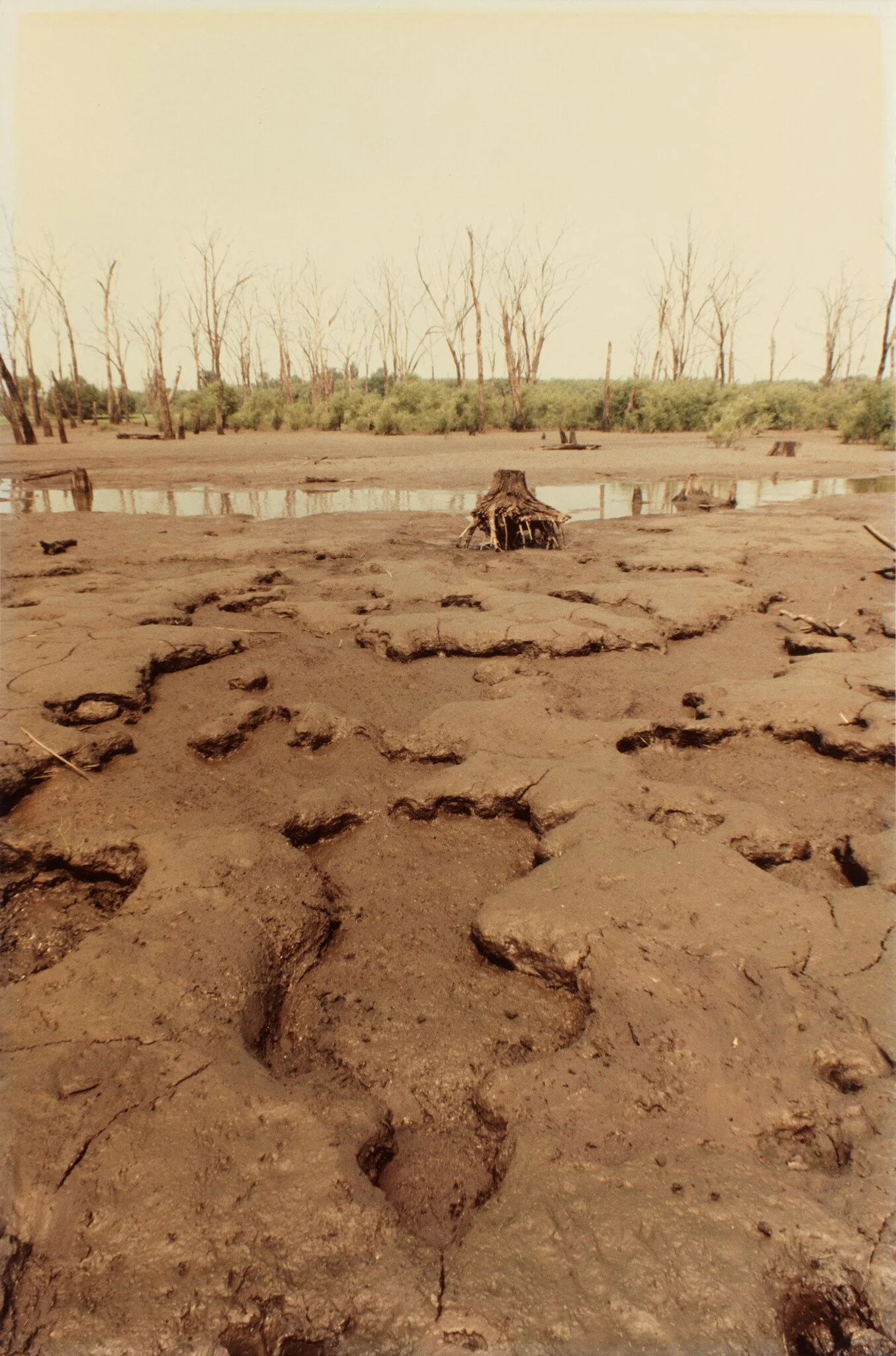
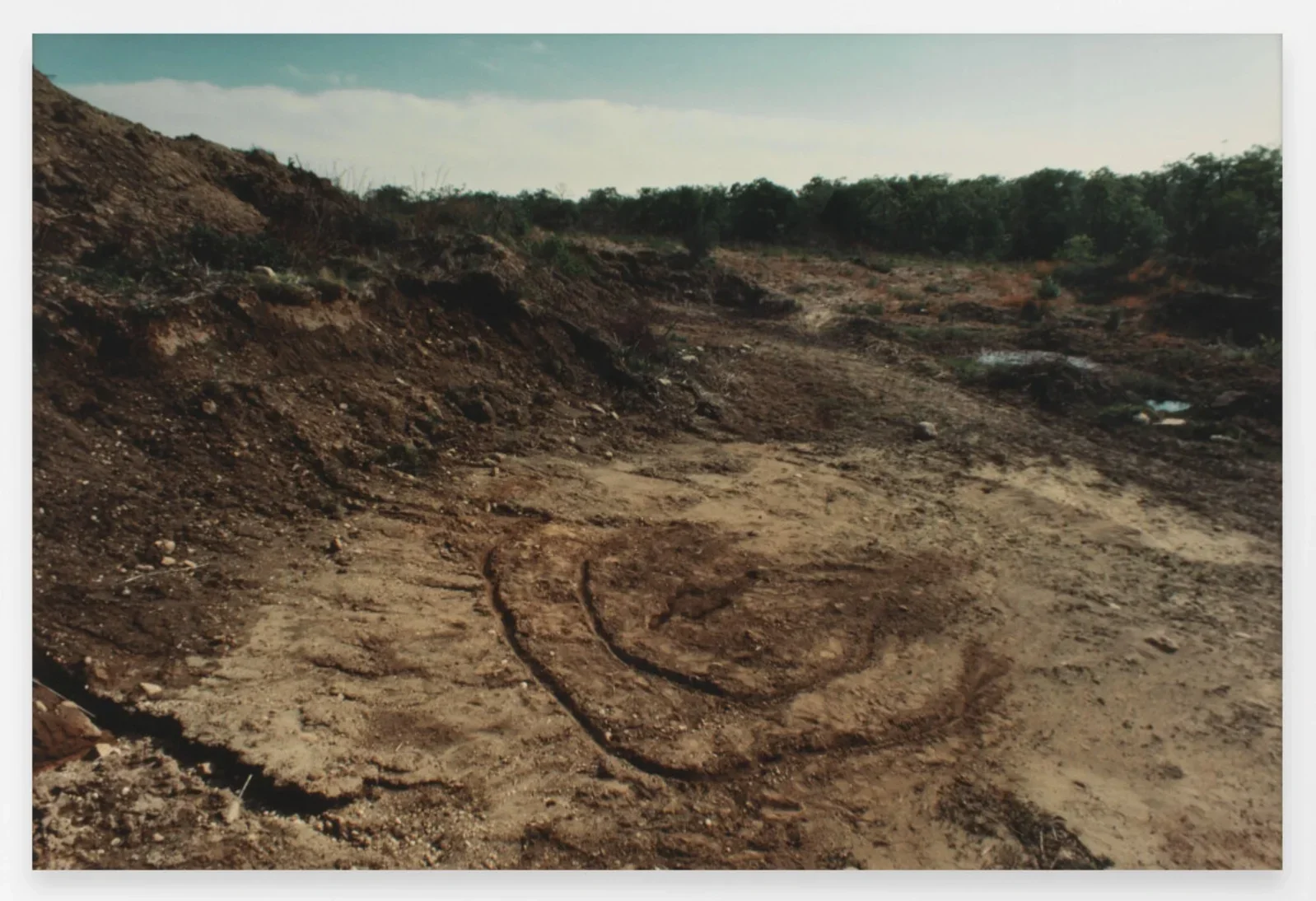
Her Iowa silhouettes, 1977, are a bit more contrast. With a few more materials to work with, specifically due to the landscape - mud, ice - she chose to feature her pieces in raw, changing lands. While the ocean in Mexico may have eroded her outline, a lot of her pieces there were done in historical and ancestral settings. Here, her silhouettes were changed and destroyed by the land that doesn’t hold as much significance, denoting the secular and vacuous change this land had on her body and soul.
There are over 200 Siluetas, and I’ve only just scratched the surface of this enormous body of work. They are layered with meaning, symbolism, and emotion. There are so many different ways to interpret them, perceive them, experience them. I can’t shake the idea, though, that the Mexico and Iowa silhouettes even feel different. Landscape and material aside, the traces in Mexico, found in more historical sites, feel powerful, bigger, forces of nature. In Iowa, they feel like they don’t even belong to her.
If my feeling is true, what really would tie this idea all together is Black Venus, 1980.
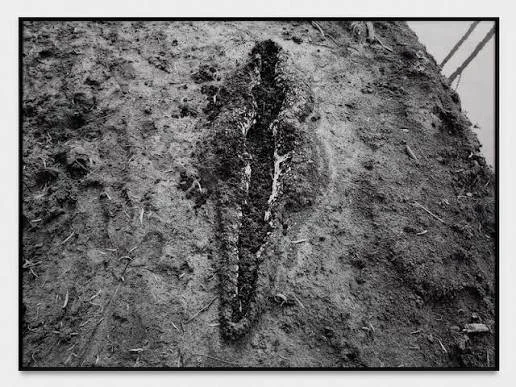
The legend of the Black Venus is an anti-slavery symbol representing a free spirit, refusing the shackles of colonization. She carved her trace in mud, specifically in Iowa, with the intent of it eroding, in rebellion against colonialism, but an awareness that this mark is temporary.
This exploration of the temporary, whether that be in Iowa or Mexico, however different or similar, led her to the permanent. This artistic seeking of belonging not only spiritually connected her to something greater, but physically brought her back home.
Because of the recognition of her work, in 1980, Ana became one of the first political exiles to be granted the right to return to Cuba. This was only two years after her father was freed from the political prison.
THE LAND AS HOME
“I was afraid before I went there because I felt I’ve been living my life with this obsessive thing in my mind - what If I find out it has nothing to do with me? But the minute I got there, it was this whole thing of belonging again.”
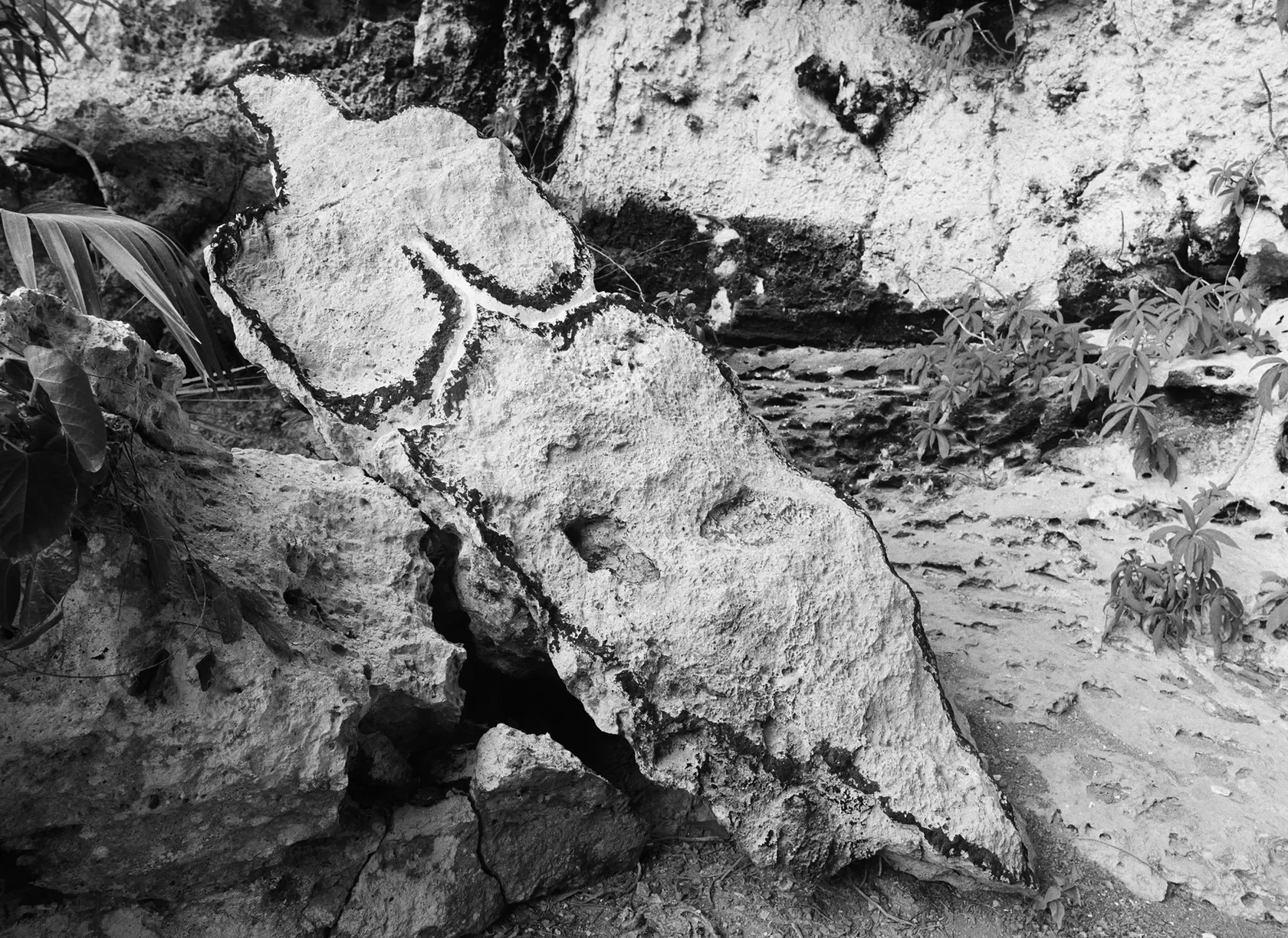
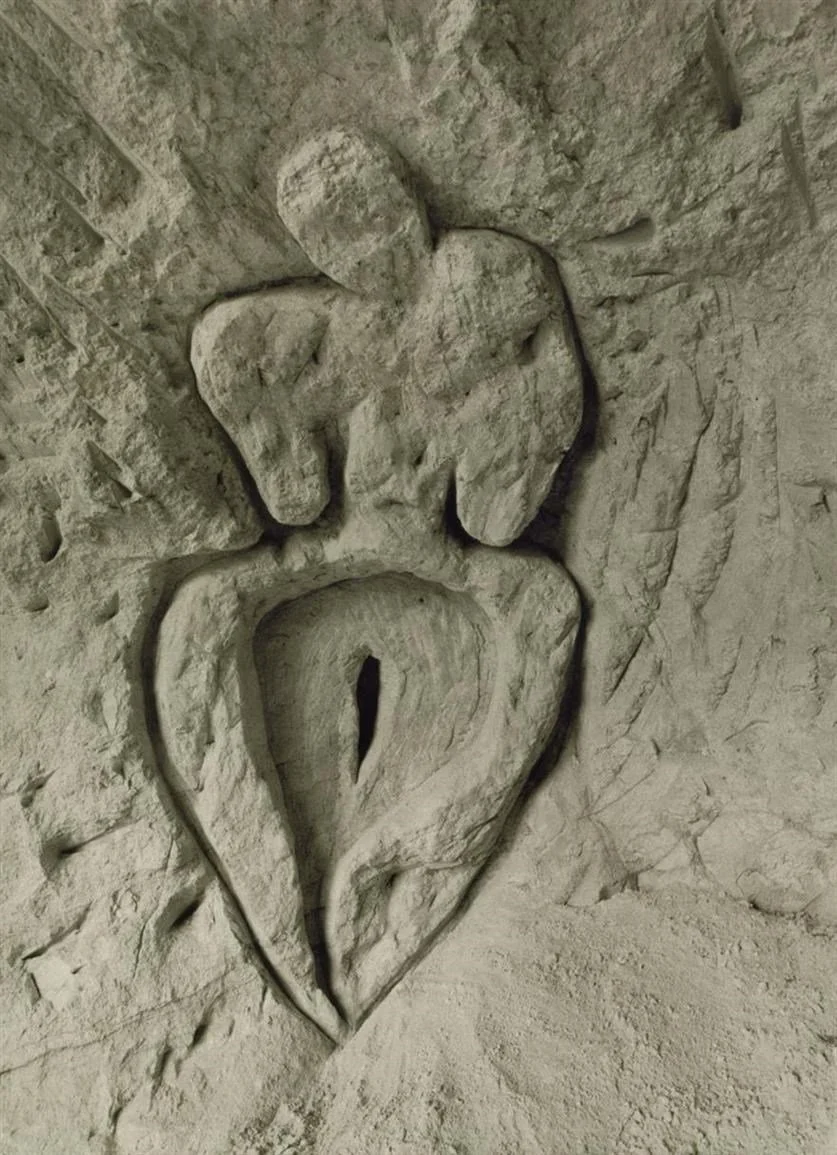
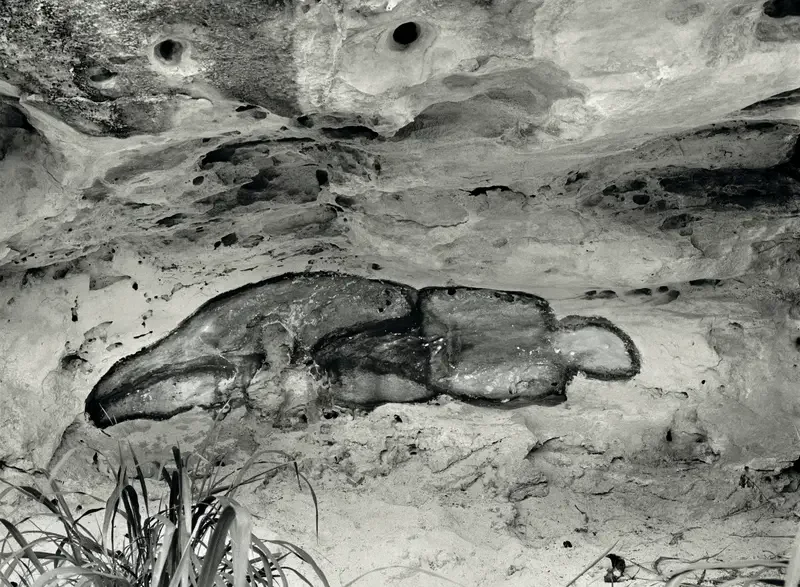
Esculturas Rupestres (Rupestrian Sculptures), 1981
“Rupestrian” means “done in on, or made of rock,” serving as a historical and archeological term to describe prehistoric cave paintings. In this series, Ana carved tracings directly into the limestone walls of the Jaruco Caves in Cuba, considered to be the birthplace of Cuban indigenous culture. This work was the ultimate return to the “maternal source” for Ana.
With her goddesses carved into rocks, and also the use of paint to emulate ancient cave works, this is an ode to the Taino culture, an indigenous group native to Cuba and colonized by Spain. From the words of Ana, it was “a collaboration between them and I.”
I find it extremely significant that in her motherland, she chose permanence as a tool of her art. By carving her trace, not to mention a more detailed, personal trace into these caves, she is reclaiming the land she always sought to return to, the place she so wholeheartedly belonged. The land as home.
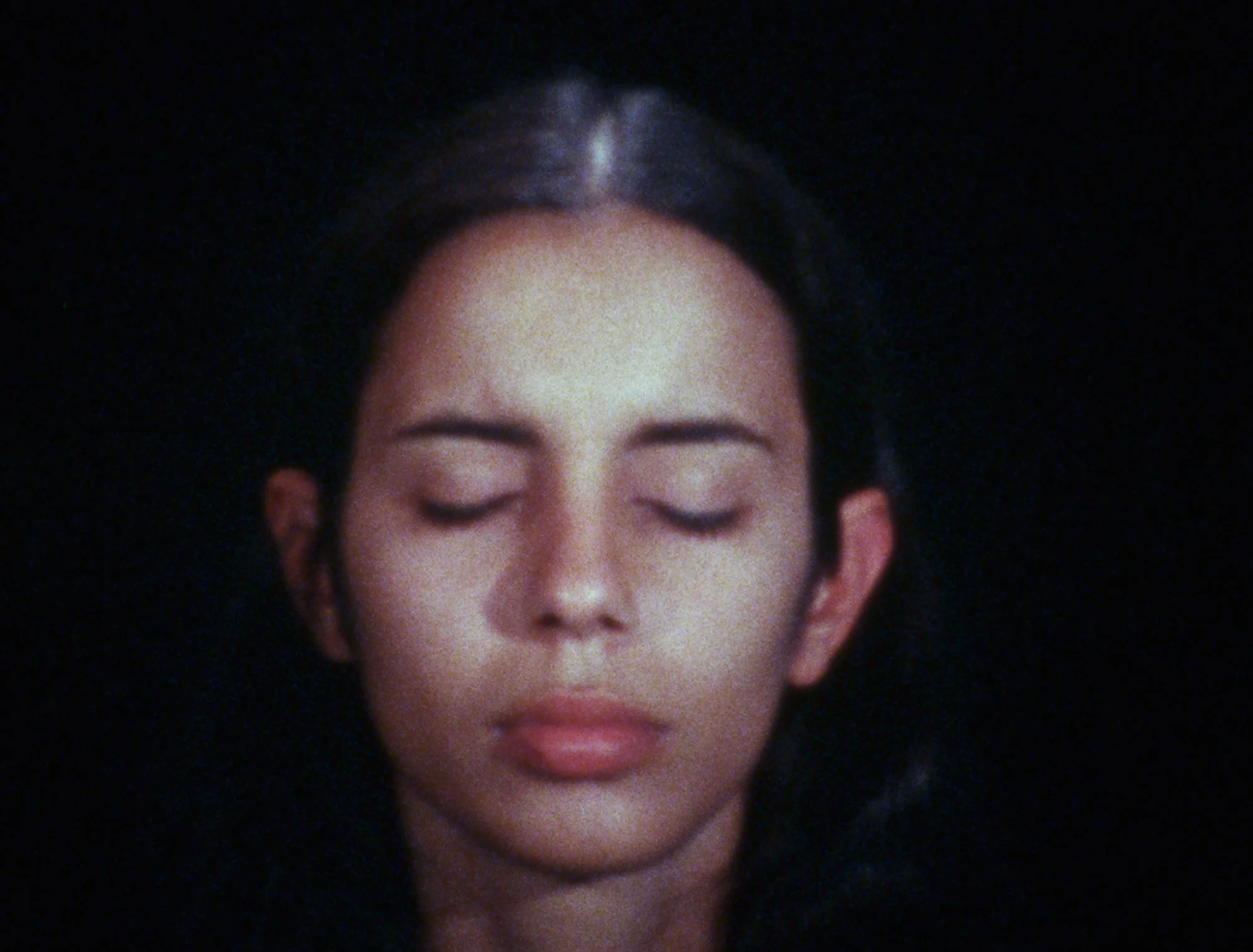
Sweating Blood, 1973
Ana planted seeds in the garden of her tragedy and devoted her life to cultivating it, exploring it, and sharing it with the rest of the world.
Within this mission, she utilized her body, a medium of ultimate vulnerability, as a tool for justice and personal exploration. There is a lack of ego and a fearlessness in her willingness to volunteer her body as a way to demand recognition for a victim and a minority, and there is a courage of leaving its trace throughout nature, exposing her emotional seeking of home for the rest of the world to understand, to resonate with.
And, the act of searching, reader, in spite of a world that attempted to bury her, is objectively hopeful, not hopeless.
May we not forget her, may we not let time and the darkness of her tragic fate wilt this garden that she sowed. Her purpose of creation is one of continuation, of constantly seeking, of perpetually fighting to live in a world that accepted her.
After all, “To go on is victory.”
Ego Death.
From July 14, 2026 - January 17, 2027, the Tate Modern is presenting a retrospective exhibition on the work of Ana Mendieta. If you have the chance, go.
Ana Mendieta. Tate Modern, https://main-tate-3be997.up.railway.app/whats-on/tate-modern/ana-mendieta. Accessed 14 Oct. 2026.
Ana Mendieta. The Estate of Ana Mendieta Collection, https://www.anamendietaartist.com/. Accessed 14 Oct. 2026.
“[Ana Mendieta: The Woman Who Reclaimed the Earth].” YouTube, https://www.youtube.com/watch?v=Hsvm9FCrJUQ. Accessed 14 Oct. 2026.
“[Ana mendieta, testimonios].” YouTube, https://www.youtube.com/watch?v=HZE_3CnCeB0. Accessed 14 Oct. 2026.
“[Ana Mendieta Artwork].” Marian Goodman Gallery, https://www.mariangoodman.com/content/feature/3961/detail/artworks65146/. Accessed 14 Oct. 2026.
“[Ana Mendieta].” Museum of Modern Art, https://www.moma.org/artists/3924-ana-mendieta. Accessed 14 Oct. 2026.
“Ana Mendieta: Body Tracks (1982).” Hemispheric Institute Digital Video Library, New York University, https://hemisphericinstitute.org/en/hidvl-collections/item/2689-ana-mendieta-body-tracks-1982.html. Accessed 14 Oct. 2026.
“Ana Mendieta, Black Venus.” Artsy, https://www.artsy.net/artwork/ana-mendieta-black-venus. Accessed 14 Oct. 2026.
Bunyan, Dr. Marcus.“[Ana Mendieta: Blood and Feathers].” Art Blart, https://artblart.com/tag/ana-mendieta-blood-and-feathers/. Accessed 14 Oct. 2026.
Cabañas, Kaira M. “Ana Mendieta: ‘Pain of Cuba, Body I Am.’” Woman’s Art Journal, vol. 20, no. 1,
1999, pp. 12–17. JSTOR, https://doi.org/10.2307/1358840. Accessed 9 Oct. 2026.
Figes, Lydia. “[Ana Mendieta’s Life Became Overshadowed by Her Death – a New Tate Retrospective Wants to Change That].” Broadsheet, 14 July 2026, https://broadsheet.com/london/articles/ana-mendieta-tate-modern.
Joanna S. Walker, ‘The Body is Present Even if in Disguise: Tracing the Trace in the Artwork of Nancy Spero and Ana Mendieta’, in Tate Papers no.11, 2009 https://tate.org.uk/research/tate-papers/11/the-body-is-present-even-if-in-disguise-tracing-the-trace-in-the-artwork-of-nancy-spero-and-ana-mendieta, accessed 14 October 2026.
Spero, Nancy. “[TRACING ANA MENDIETA].” Artforum, https://www.artforum.com/features/tracing-ana-mendieta-203560/. Accessed 14 Oct. 2026.